Seed Energy · for American farms

Sun on your
fields. Power
at your pump.

A shipping container of solar and batteries delivered to your farm. We handle the install, the paperwork, and the permits. You stop paying for diesel.

4 hrs
From truck delivery to running power. No big crews, no trenching.
~16 mo
Typical payback period on a direct purchase at current energy prices — before any grant funding.
10 yrs
Service, parts, and software covered for the life of the lease.
What it is

A solar container that cuts your fuel bill from day one.

Same idea as a generator. But it runs on sunlight, makes no noise, and the fuel bill is zero. We drop it on your land, plug in your pumps and parlor, and walk you through the rebates.

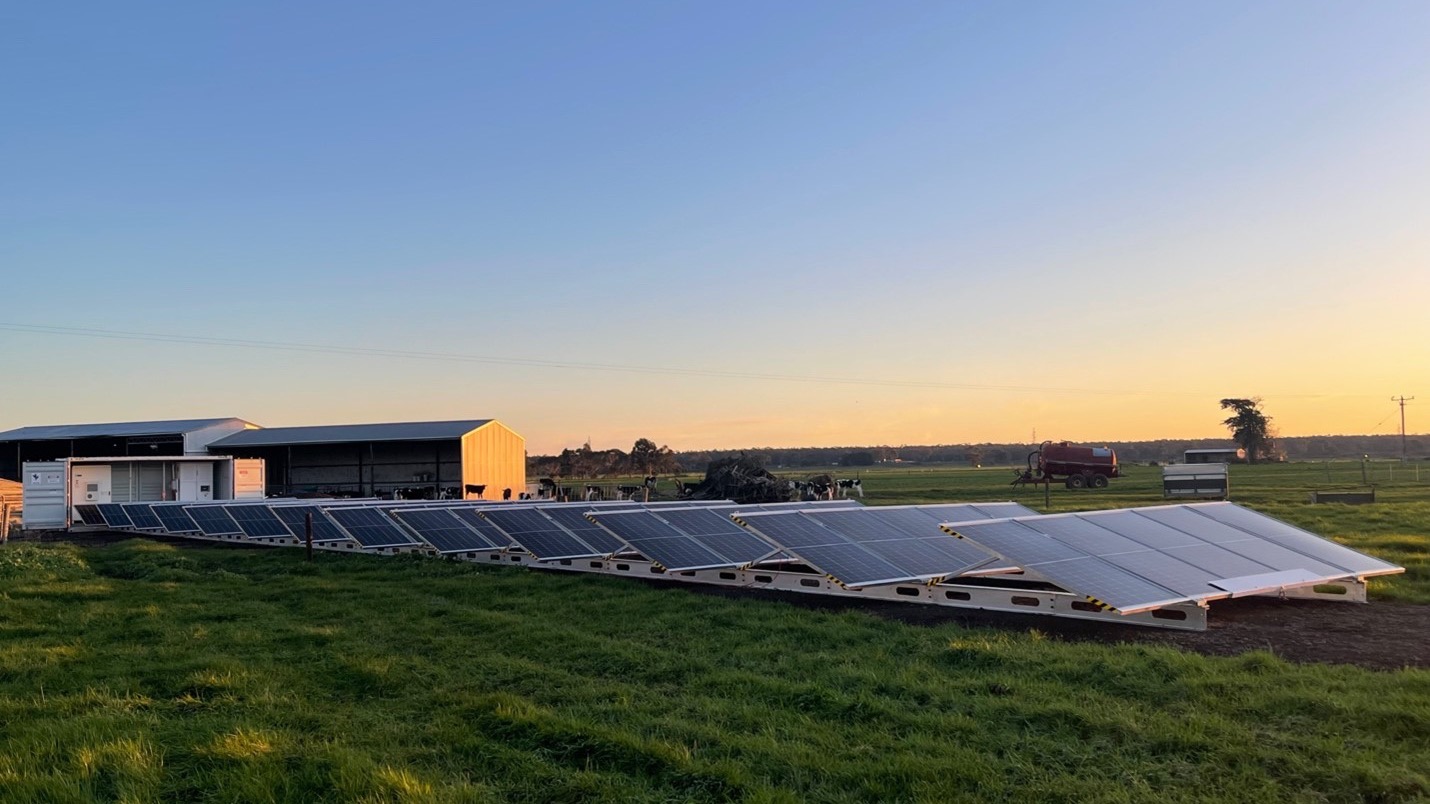
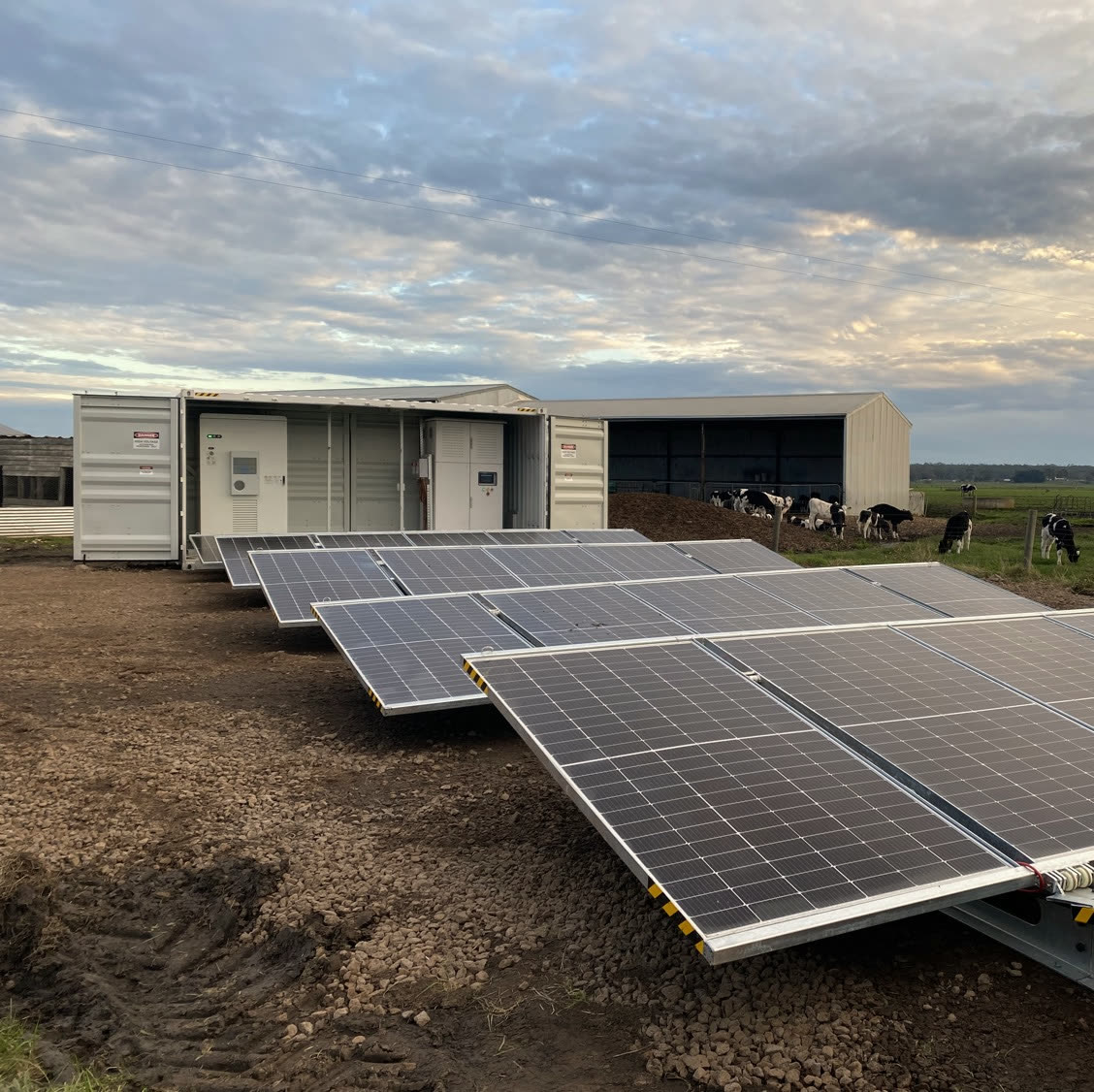
Seed Energy container with solar panels deployed beside a dairy barn at sunset
Mulheron Dairy · Victoria, AU
1

It shows up on a flatbed.

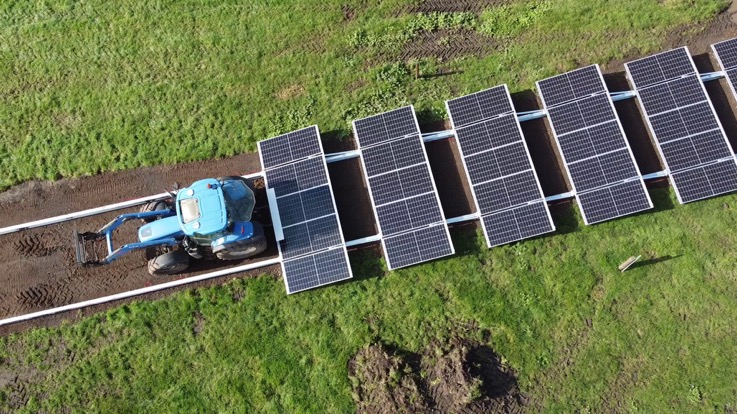
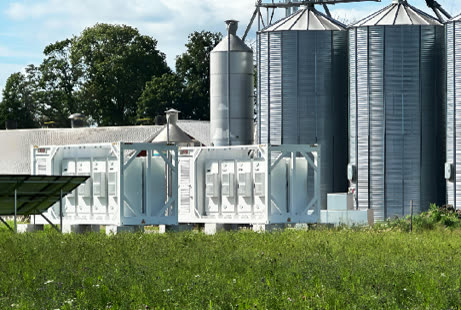
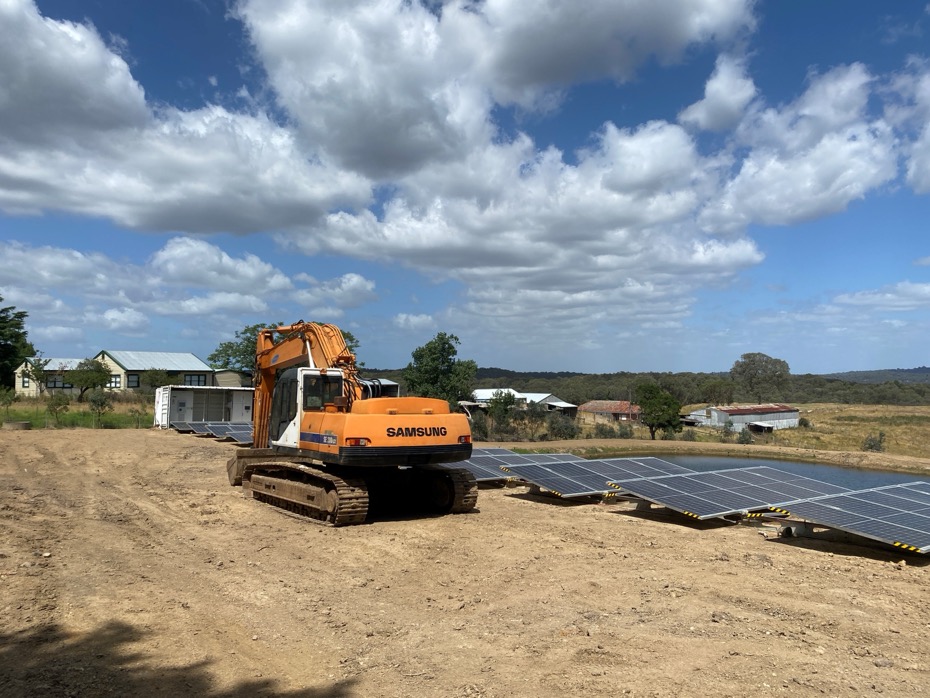
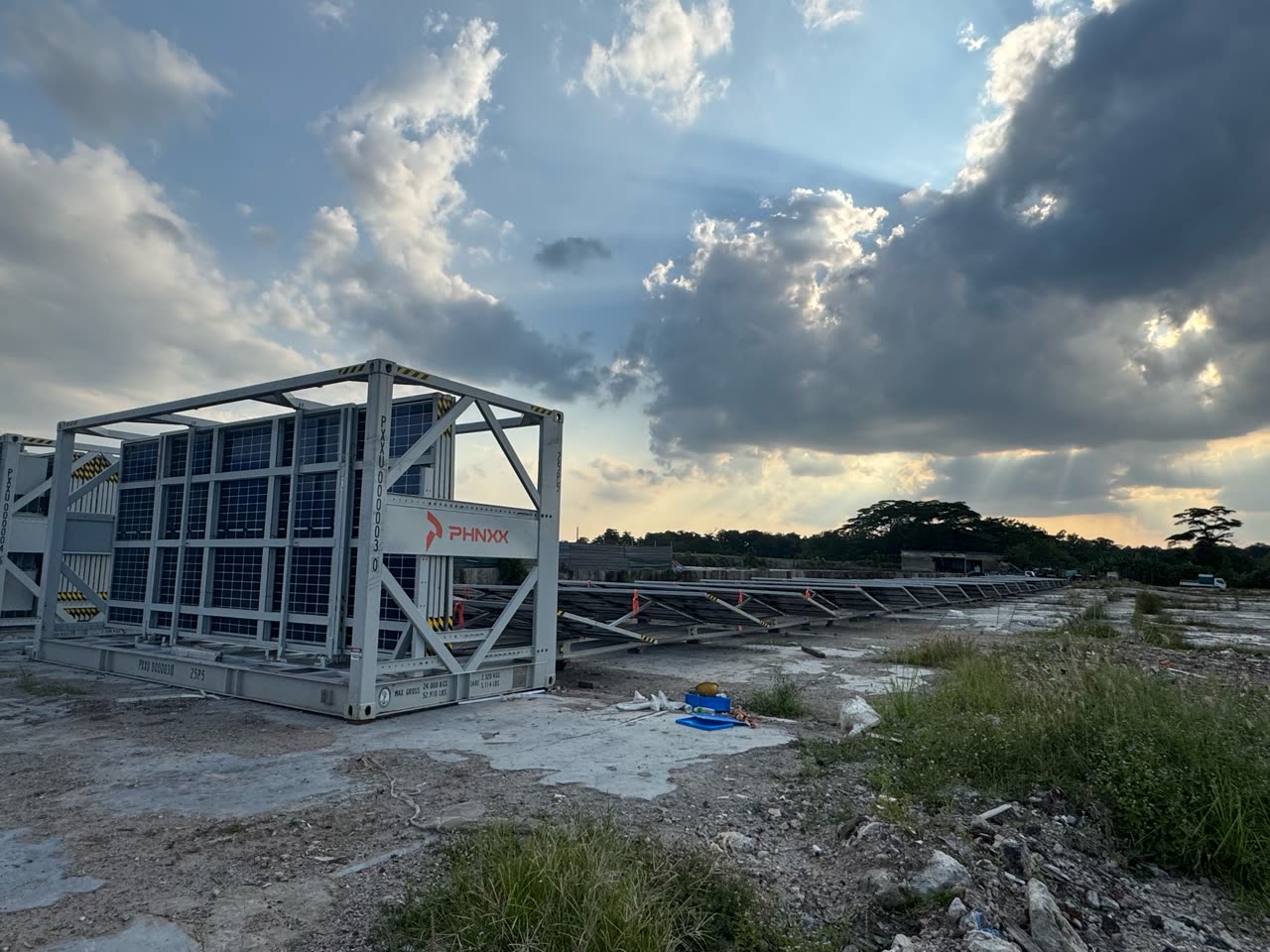
One standard 20-foot shipping container. Solar panels fold out. Batteries are inside. Same footprint as a small grain bin.

2

We hook it up the same morning.

Plugs into your existing panel. Runs your milking parlor, cooler, irrigation pumps, shop — whatever you tell us is on the line.

3

When the sun's down, the battery takes over.

Stores enough to run through the night. If you have grid or a backup generator, it leans on those when it has to. You don't think about it.

4

If something breaks, we fix it.

Monitored from our shop. Most issues we see before you do. Service and parts are covered for the length of the rental.

What you'll save

Move the slider. That's your check.

Tell us what you spend on diesel or grid power each month. We'll show you what stays in your pocket.

Roughly your operation
300–800 head, parlor + cooler
Diesel + power bill / month
$ 2,400 / mo
$400$9,000
Estimate. The Seed Energy unit is sized to cover roughly 70–80% of your farm load. Most operations choose between an outright purchase (faster payback, you own the asset) and a Phnxx-arranged lease-to-own structure (no money down, monthly payments offset by your existing energy spend). The actual numbers depend on your operation, your sun hours, and which federal and state programs are open at the time you apply. We sit down with you and run the real math against your last 12 months of bills before anything is signed.
Today, you're paying
$2,400/mo
for diesel + grid
With a Seed Energy lease-to-own
$1,8002,200/mo
varies with grant outcomes
Direct purchase payback
~16 months
at current energy prices, before any grant funding.
Either way, your fuel bill stops growing.
60t less CO₂ per year · We file the USDA paperwork
60 tons
CO₂ kept out of the air, per unit per year.
116 mph
Wind-tested in the field. It's not going anywhere.
24/7
We monitor it from our shop. You don't have to.
10 yrs
Service, parts and software covered.
What's in the box

What's actually in the container.

One standard 20-foot shipping container. Solar panels fold out from the roof. Battery bank, inverter, and control system are inside. Wind-rated to 187 km/h. Seismic-certified to IEC 60980 Level 8. Designed for remote sites in Australia — built for working farms anywhere.

ComponentSpecPlain-English version
Solar array 35 / 70 / 88 kW configurations, bi-facial PV The panels. Three sizes depending on your operation. Fold out from the container roof.
Battery storage 100 / 120 / 241 kWh integrated, up to 1,720 kWh containerised Lithium iron phosphate (LFP). Stores enough to run through the night. Scales up if you have heavy night loads.
Inverter & controls 30 / 50 / 100 kW rated output, optional 40 / 70 / 125 kVA backup generator Converts solar to usable AC, manages the battery, talks to your existing electrical panel. Backup gen is optional.
Monitoring Real-time generation, storage, and consumption We see how it's running before you do. Predictive maintenance, remote diagnostics, alerts to our shop.
187 km/h
Wind survival rating. Australian Wind Region B compliant.
IEC 60980 L8
Seismic certification. Built for remote sites that don't get a second visit.
Watch the system in action
What makes it different

Built to move. That's the point.

Most solar on a working farm is a permanent installation on a piece of land the farmer hopes won't change. We built ours to move with the operation.

Movable.

A Seed Energy unit is physically relocatable. Customers in Australia routinely move units between sites for seasonal pumping requirements — summer irrigation pumping, winter stock-watering at a different location. That flexibility doesn't exist with fixed ground-mount solar.

Land-light.

The container footprint is small enough that it does not take productive farmland out of feed or grazing use. USDA scoring under the new farm bill increasingly disfavors solar projects on prime farmland; our form factor sits cleanly outside that category.

Behind-the-meter.

The system serves your own loads — pumping, parlor, refrigeration — not utility export. That sits inside the original purpose of USDA's renewable energy programs and avoids the regulatory ambiguity that surrounds larger ground-mount projects.

Redeployable across the asset's life.

If you consolidate, sell, or shift production, the unit moves with you or returns to the fleet for redeployment. Fixed solar projects are stranded on the original parcel.

The funding

Federal and state grants — the upside, not the foundation.

We do the paperwork.

Federal and state grant programs can offset a meaningful portion of system cost — but the federal landscape has shifted materially since December 2024. We do not build the commercial case on grant funding. Instead, the system pays for itself on energy savings alone at current diesel and grid prices, and grants accelerate that payback further. Here's the current landscape, presented honestly so you can see what's funded today and what's contingent.

Worked example 1,500-cow California dairy · headline system price $600,000 · low and high cases reflect current uncertainty in the federal incentive landscape
Program Status Low case High case
EQIP Active. USDA NRCS, Conservation Practice Standard 533. Funds the irrigation and pumping scope (not the solar array). 75% cost-share; 90% for historically underserved producers. $450k cap per producer per 5-year cycle. $100,000 $150,000
California SWEEP Active. Funded under Proposition 4 (Climate Resilience Bond, Nov 2024). $34M for FY 25–26, distributed via regional Block Grant Recipients. Funds renewable energy installations that reduce on-farm water and energy use. $200k cap per operation. $50,000 $100,000
REAP Paused since December 2024. Expected to reopen summer 2026 at 25% (down from the IRA-era 50%). Loan guarantees up to 75% have continued. $0 $100,000
Federal ITC §48E Expiring. Available only for projects that have commenced construction with a safe harbor in place by July 4, 2026. For projects starting after that date, treat as $0. $0 $0
MACRS depreciation No longer automatic. The 5-year accelerated schedule no longer applies to solar by default. $0 $0
Total public funding $150,000 $350,000
Net to producer Paid up front (Direct Purchase) or financed via the Lease-to-Own structure $450,000 $250,000

EQIP and REAP are reimbursement-based and require pre-approval before installation — you can't buy first and apply after. We handle the application, coordinate with your county NRCS office, and engage established grant-writing partners (Harvest California in California; named regional consultants elsewhere) on your behalf. The cost is covered out of the project margin; you don't pay for grant writing. The example above is illustrative — the actual stack depends on your state, your category of producer, and which programs are open at the time you apply.

A note on timing

The federal incentive landscape has shifted materially since December 2024. REAP grants have been paused; the federal solar ITC expires for projects that don't commence construction by July 4, 2026; MACRS accelerated depreciation no longer automatically applies. We track these changes continuously and reprice quotes against the current rules — not against the rules that existed when the system was designed.

Real farms · real jobs

From the parlor to the back forty.

Same container, different jobs.

Through grid outages
Dairy & livestock

Through grid outages

Rotary parlors, milk cooling, fans, lights — they keep running when the wires go down.

Pumps without diesel hauls
Irrigation

Pumps without diesel hauls

Bore pumps and pivots, day or night, no fuel deliveries to a back 40.

Drying, cooling, storage
Grain & cold chain

Drying, cooling, storage

Grain dryers, walk-in coolers, processing rooms — steady power, no spikes on your bill.

Welders, lifts, lighting
Shop & yard

Welders, lifts, lighting

Heavy draw on your shop tools without tripping the panel or running a generator all day.

Power past the line
Off-grid corners

Power past the line

New barn, fence chargers, well — places where running new wire from the meter just isn't practical.

Storms, fires, outages
Backup

Storms, fires, outages

When the grid drops, the parlor doesn't. Critical loads stay up while neighbors go dark.

How you get one

Two ways to acquire a Seed Energy system.

Direct purchase

Best for larger operations with cash or established Farm Credit relationships.

You own the asset on day one. Fastest payback. You capture all available federal and state grants. Net cost after grants is typically $250k–$450k depending on grant outcomes; energy savings of $40–50k per year drive payback.

Phnxx lease-to-own

Best for mid-size operations that want zero money down.

We deliver the system, finance the bridge, and the grant reimbursements pay down the balance as they arrive. The residual converts to a 7-year term loan. You own the asset on day one and capture the grants directly. After year 7, the loan is repaid and full energy savings flow to the farm.

Either path

Whichever model fits, the next four steps look the same.

01

You call us.

10 minutes on the phone. We ask about your bill, your load, your land. No pitch.

02

We size it for you.

A real engineer maps your operation and picks the size unit that fits. We send you a one-page quote.

03

We deliver and install.

Container arrives. Crew sets it. You're running on solar by the end of the day. We file the rebates.

04

You pay one bill.

A flat monthly rental, less than you were paying for diesel. We keep it running. Cancel any time after year one.

Mulheron Dairy pilot site — container, solar panels, and dairy herd
Pilot performance

Predicted generation: 81 kWh per day. Actual generation: 89 kWh per day — 10% above model. Zero milking-period interruptions across the formally monitored 30-day window.

MD
Phnxx pilot performance report · December 2023
Mulheron Dairy · Swan Marsh, Victoria · 33 kW PV + 30 kW / 143 kWh battery · Sept–Oct 2023
The partnership

A partnership built for this market.

Seed Energy is the customer brand for a partnership between three companies. Phnxx designs the system. LIT Workshop builds it in Oregon. Seed Innovation runs the US business. The hardware has been deployed across Australia and Southeast Asia since 2023. The factory has been building precision equipment in Portland since 1996. You deal with one company; three are standing behind it.

Melbourne, Australia System designer

Phnxx

Phnxx designs the containerised solar microgrid. Backed by ENGIE Factory APAC. Operating commercial pilots across Australia and Southeast Asia since 2023. The Mulheron Dairy unit is theirs — predicted 81 kWh per day, delivered 89. Stays accountable for the life of every system they ship.

phnxx.io →
Portland, Oregon US manufacturer

LIT Workshop

LIT Workshop has been building precision custom equipment in Portland since 1996 — retail fixtures, architectural features, modular housing, engineered components. They build the US version of the Phnxx unit on-shore, which is what unlocks domestic-content tax credits and qualifies the system for federal procurement. Stays accountable for the life of every unit they build.

litws.com →
Palo Alto, California Operating partner

Seed Innovation

Seed Innovation runs the Seed Energy business in the US — sizes your system, files your USDA paperwork, signs your lease, monitors your unit, and stays on the phone for the life of the agreement. Compensated by the SPV under a long-term operator contract with a stake in the joint venture. The company you actually deal with.

seedinnovation.io →
San Francisco Bay Area Technology partner

Paired Power

Paired Power brings the energy management software layer to the Seed Energy stack. Their platform dispatches power in real time across solar generation, battery storage, parlor and pump loads, and grid imports when needed — the software that turns a static container of solar into a microgrid that thinks.

pairedpower.com →
Questions

What farmers ask before signing.

What if my operation moves or expands?

The asset is portable. If you sell ground, lease additional acres, or consolidate operations, the container can be relocated. Solar that doesn't strand on land you might one day not own — that's one of the main reasons we built the system the way we did.

Do I need to take productive farmland out of use?

No. The container plus its solar array sits adjacent to the loads it serves — typically the same footprint as a small grain bin. USDA scoring on REAP increasingly disfavors large solar projects that displace productive farmland. Our small-footprint, behind-the-meter form factor is structurally unlikely to be penalized under that scoring, though the rules continue to evolve. We track guidance changes and will flag any material shift to active customers.

What happens if the system underperforms?

Performance is monitored continuously and benchmarked against the design model. The Mulheron Dairy pilot generated 89 kWh/day against a predicted 81 — 10% above model — over a formally monitored 30-day window. If a deployed system materially underperforms, the lease has performance-based remedies. We walk through the specific terms before you sign.

How does the funding actually flow?

EQIP and SWEEP are reimbursement programs — funds are obligated to the project after approval and disbursed after installation. Under our lease-to-own structure, we float the bridge through a Farm Credit System lending partner, and the grant reimbursements pay down the bridge as they arrive. REAP grants have been paused since December 2024 and are expected to reopen at 25% in summer 2026, though timing remains uncertain — when REAP reopens, it stacks on top of the EQIP and SWEEP funding for additional savings. The federal Investment Tax Credit applies only to projects that have commenced construction with a safe harbor in place by July 4, 2026. You don't write a check to USDA, you don't wait for a grant to clear before using the system, and you don't pay for the grant-writing work.

Who owns the system?

The SPV — a special-purpose vehicle jointly sponsored by Phnxx and LIT Workshop with US capital partners — owns the asset. You lease it. This is the structure used by virtually every commercial solar deal in the US over the last decade. It's why you don't pay upfront, and it's why the federal tax credit math works.

Can I buy the system instead?

Yes. The Direct Purchase model is the right choice for many operations — particularly larger farms with cash or established Farm Credit relationships. You own the asset on day one, you capture all available federal and state grants directly, and your payback is typically the fastest. The Lease-to-Own model is the right choice when you want zero money down or when working capital is the binding constraint. We model both for you against your last 12 months of bills before anything is signed.

Talk to us

Tell us about your farm. We'll call you back.

A real person on the phone within a business day. No automated emails, no pressure.

What happens after you hit send

One of our farm-side engineers gives you a call. We ask 5 or 6 questions about your operation. If a system makes sense for you, we send a written quote. If it doesn't, we tell you straight.

  • No site visit needed for the first conversation
  • Quote in writing within a week
  • No deposit until you say yes
  • USDA EQIP, REAP, and state rebates — we file them